Friday, August 21, 2015

Tuesday, August 18, 2015
The History Makers: Leon Chandler
by Peter Nardini

Leon with fly rod in hand standing in front his trusty camper
Leon Chandler was born on a farm in Missouri in 1922 and arrived in Cortland, New York during the summer of 1941 on a greyhound bus, with all of his worldly possessions in a cardboard suitcase. He came to visit the family of a cousin and never left, finding work in the furniture department at Montgomery Ward until he answered a newspaper ad and joined the Cortland Line Co on December 12, 1941 - five days following Pearl Harbor. After serving in the Signal Corps in the Philippines and New Guinea during World War II, Chandler returned to Cortland Line and worked his way up to the sales department. He soon became a fixture at the trade shows that were gaining popularity in the sporting goods industry at the time and as his profile as a presenter and teacher grew, the U.S. Department of Commerce approached him to teach fishing (not just on the fly- there is one story of using a bait caster rod to snap cigarettes out of people’s mouths) to people in foreign countries in hopes of raising awareness of American angling products and promoting the American model of fisheries management. He traveled from Poland to Chile and all around the world, bringing the fishing experience to the most remote places. While his travels earned him the moniker of “fly fishing ambassador to the world” Chandler made key contributions to the fly fishing community at home as well. He became Vice President of the Cortland Line Company, ushering in some of the most important and lasting innovations of the 20th century. In 1953 the Cortland Line Company introduced the 333 series of fly line- billed as “the unsinkable line” - that was the first to use poly vinyl chloride (PVC) as a thin coating over braided nylon, a major improvement over oil based lines. The coming decades brought even more innovation to the fly line and Chandler kept Cortland at the forefront of the forever-changing technological landscape of core materials, weights, and temperature ratings. His business acumen and marketing expertise led to his involvement with the American Fishing Tackle Manufacturers Association (AFTMA), serving as its president for two years. Leon Chandler was also active in the conservation community as well, serving as President of Trout Unlimited for two years and another 22 on its Board of Directors. In 1988 he was elected to the Freshwater Hall of Fame and received the Dolphin Award, one of the highest honors in sport fishing. In 1992, after over fifty years with one company, Chandler retired from Cortland Line. Not one to sit around, Chandler bought a motor home and fished his way across the country. Between trips and popping in at Cortland from time to time, the mobile always seemed to return to a familiar locale on the Missouri River, one of Leon Chandler’s favorite fishing spots that he enjoyed floating with sons Kim and Jeff as well as his grandsons. Leon passed away in 2004 at the age of 81. Leon couldn’t always be seen actually fishing on the Missouri as he seemed to spend more time on the bank carefully watching for a rising fish before starting the stalk. Leon adopted the quote from baseball great Yogi Berra, “You can observe a lot just by watching” and this photo is a classic example of Leon on the river bank doing just that.

Leon Chandler could cast a fly just as gracefully and as far as some of the other legends of the sport and could have promoted his personal brand as others did in the industry, but he was truly in it for the experience. He appreciated the great opportunities that his life in fly fishing afforded him, the places that it took him, and the company of the people it introduced him to. Being able to cast in the backdrop of New York City lights, behind the Iron Curtain, and in Japan was enough for Leon Chandler. He was a phenomenal teacher as well, to the point where Field & Stream Magazine called him fly fishing’s “Johnny Appleseed” on account of the diverse group of people he touched in all of his travels around the globe. When he showed up at each demonstration in a foreign land, he took the look of amazement on people’s faces that had not seen a fly rod, much less the art a man can create with it, and turned it into look of joy when they got to experience and learn it themselves. Chandler was especially big news in Japan where he was a bigger celebrity than in the U.S. and his image and lessons continue to be used to influence the fishing culture there. In the early 1970’s, fly fishermen in Japan were few in numbers. As a direct result of Leon’s clinics and casting demonstrations, fly fishing in Japan is now common place. One student in a clinic was Shin Hongo a famous Japanese sculptor pictured here with Leon and his wife Margaret.

At home in the US, Leon was called upon for advice from such notorieties as Mickey Mantle, Ted Williams, Jimmy Carter, Merlin Olson, Ben Johnson, Bobby Bare and Ernest Gallo.

Leon’s son, Kim Chandler, tells a story of how his father, his brother Jeff, and himself walked into a fly shop in Craig, Montana and noticed two Japanese men getting outfitted with gear. Once the two men took notice of Leon, they rushed over and were so excited it was as if they had met the President of the United States. They insisted on having their picture taken with Leon. Kim also told a story of how, when Leon was traveling out of his motor home and fishing on the Missouri River, he accidentally snagged an entire length of line with a fish still attached to it. What’s more is that he recognized it as Cortland 444 and, after setting the fish free, he took the line to a local fly shop and told them to ask around if someone was missing their fly line, leaving his contact information. Surely enough, Leon received a call a couple months later from a gentleman in New York whom the fly line belonged to, Chandler met up with him and gave him a tour of the Cortland factory. This story epitomizes Leon Chandler- he enjoyed his travels abroad and was awestruck by the fact that he was so lucky to enjoy that part of it, but he could also make an adventure out of something as ordinary as snagging someone’s fly line. Most anglers would have left the line, kept it for themselves, or set it in the trash, but Chandler saw it as an opportunity to find the person that it belonged to, sharing his experience and making a complete stranger’s day.
 |
| Leon with President Kekkonen of Finland in 1961 |
 |
| Leon Chandler in Poland (1963) |
 |
| Leon demonstrating in Poland (1963) |
 |
| Berlin 1969 |
 |
| Wowing the crowd by snapping a cigarette out of a brave volunteer's mouth |
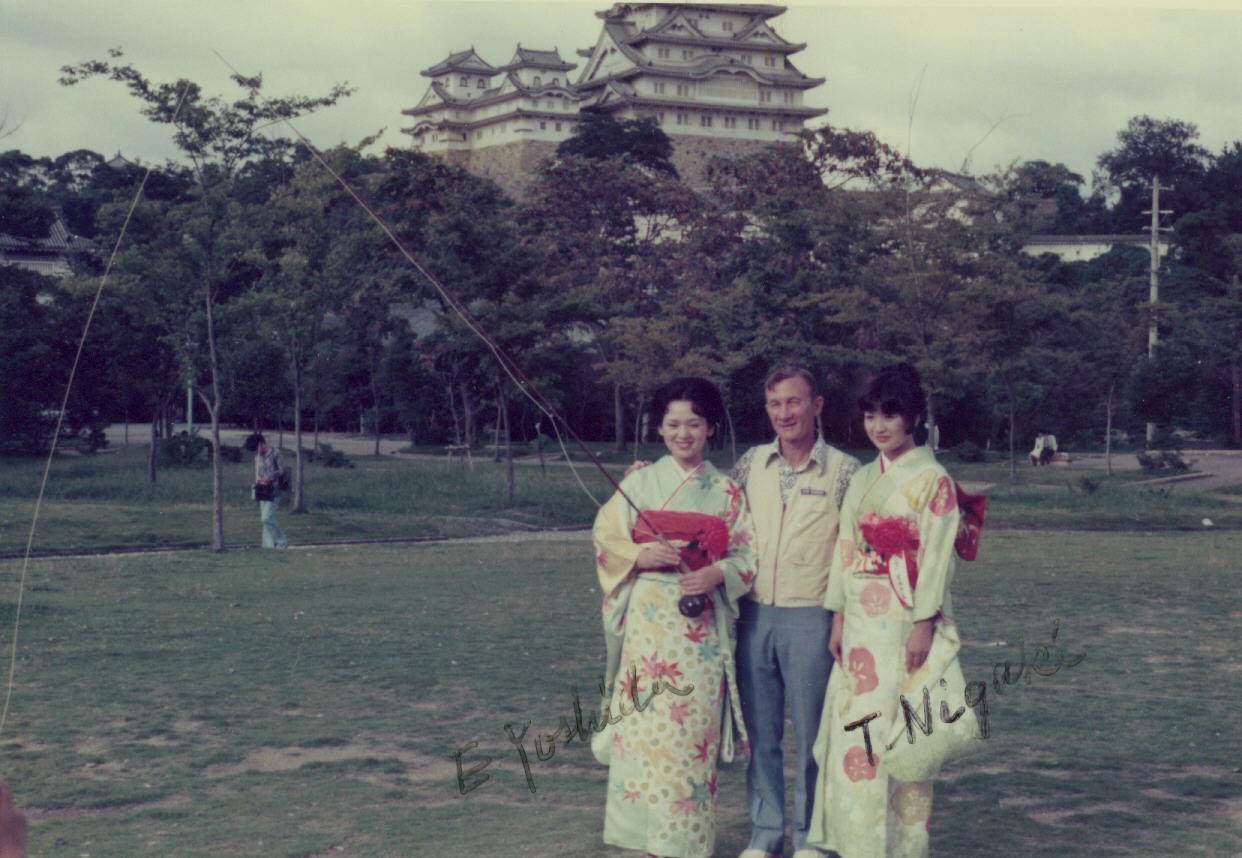 |
| Leon in Japan (1972) |
 |
| Taking a break from international travel and showing the crowd at the Abercrombie & Fitch building in New York City how to fly cast |
*all images courtesy of Kim Chandler
Wednesday, July 29, 2015
Catching up with Whitney Lange Milhoan
Whitney Lange Milhoan with Peter Nardini

Raised
near Glacier National Park, Whitney is truly a product of the outdoors. Whitney
spent nearly a decade as a fly fishing and whitewater rafting guide on
Glacier's Flathead River system, working her way through a degree from the
University of Montana. It was during her time as a fishing guide that Whitney
first heard of Casting for Recovery, a nonprofit dedicated to providing healing
fly fishing experiences for breast cancer survivors. She followed the
organization for years, then helped launch the first Western Montana retreat in
2011, where she continues to volunteer as a fly fishing instructor.
In
her quest to pursue an outdoor lifestyle and share this passion with others,
Whitney worked at a leading outdoor adventure therapy organization for eight
years before joining Casting for Recovery in the summer of 2013. She splits her
time between the mountains of Montana and the CfR office in Vermont. Casting
for Recovery now hosts 40 retreats across the country, serving 600 breast
cancer survivors each year. The retreats offer opportunities for women to find
inspiration, discover renewed energy for life and experience healing connections
with other women and nature.
When
not working or traveling for CfR, Whitney can be found wading Montana's rivers
or chasing her kids down the ski slopes. She's passionate about microbrews,
sushi, and protecting and restoring coldwater fisheries and watersheds. We
caught up with her recently to see what it’s like in a day in the life of the
Casting for Recovery Executive Director:
What is it about CfR
that drew you to it and led you to where you are now?
WLM: I first heard about CfR in the late nineties. I
was fairly new to fly fishing and was obsessed with Joan Wulff. Well, I’m
actually still obsessed with Joan Wulff. But at the time, I was studying her
teachings very closely and heard a radio interview where Joan mentioned an
organization called Casting for Recovery that utilizes fly fishing to promote
physical and emotional healing for breast cancer survivors. It was an immediate
connection and I knew I wanted to be involved. I wrote a letter to CfR
inquiring about an internship. The internship never transpired, but years later
I volunteered as a fly fishing instructor when the program came to Western MT.
I still volunteer at that retreat each September, it’s one of the highlights of
my year.
What is your focus
moving forward with CfR? Future plans?
WLM: Casting for Recovery has served more than 7,000
women to date. Nearly 600 women attend CfR retreats each year, which is
wonderful. But we still have a lot of work to do. We’re currently only serving
one-third of the women who apply. The demand for this program is so great, and
it’s difficult to have to turn so many women away. I’m focused on reaching more
women in a way that is also sustainable and smart for the health of the
organization. I’m dedicated to establishing and nurturing strong relationships
and partnerships that will allow us to continue innovating and expanding our
reach.
What was your first
experience like with Gwenn Perkins and Dr. Benita Walton as CfR co-founders, any thoughts looking
back at 20 years of CfR?
 |
| Dr. Benita Walton and Gwenn Perkins |
WLM: Gwenn and Benita are incredible women. They are
both still very supportive of Casting for Recovery. Gwenn recently competed in
the Iditarod, and used that experience to raise funds and awareness for CfR.
Gwenn and Benita are humble, thoughtful co-founders. They both acknowledge that
CfR is the product of a group of passionate women who believed in this concept
and came together to make it a reality.
It was a very grassroots origin and a team effort. They’re both amazed
at how CfR has grown over the past 20 years.
I’m sure that there
has been many pivotal moments or experiences, any that stand out in particular?
Any aha moment when you saw things coming together with your vision and its
effect on the retreats?
WLM: This isn’t a specific ‘aha’ moment, but I hear
from people on a daily basis whose lives have been positively impacted by CfR.
I just returned from ICAST, a big fishing industry tradeshow in Orlando. We had
so many people come up and introduce themselves and share their stories – women
who had attended, men who had volunteered, or industry partners who felt
personally connected. It’s inspiring to see the impact being made across the
country and even internationally. I’m honored to be a small part of that.
How has your
background in wilderness therapy helped in what you do?
WLM: I’m so grateful to have had the opportunity to
work with some of the leaders in outdoor adventure therapy. The biggest
takeaway for me has been the importance of providing an authentic experience.
So much of what we do at CfR is just creating the right environment to allow
healing to happen organically through shared experience. We’re not trying to
groom professional fly casters, we’re just allowing women to share an authentic
experience and connect with the natural world. It seems so simple, but sometimes
creating the right environment to encourage that healing can be trickier than
it sounds. CfR has worked hard to also incorporate the elements of medical
education and facilitated emotional support, enhancing the program.
What is it about fly
fishing and the overall effect of being on the water or participating in active

WLM: I believe
that outdoor experiences renew our spirits and remind us we’re alive! That
sounds corny, I know, but so many people are dealing with seemingly
insurmountable challenges. Physical hardship or illness, emotional stress,
societal pressure and expectations, etc. When you’re standing in the river,
climbing up a mountain, or even just watching the sunset, here’s a deep
connection that pulls at the core of who you are beneath those stressors.
Outdoor experiences seem to provide a clarity and a boost of adrenaline that
remind us that our life circumstances—physical or emotional—do not have to
define us.
Who or what event got
you into fly fishing?
WLM: My sister started fly fishing when we were
teenagers and got me into it. My dad is not a fly fisher, but he’s an
outdoorsman in the truest sense—a man with a true respect and appreciation for
our natural resources and the healing properties of the outdoors. We were
raised deeply rooted in outdoor experience so my connection to fly fishing
seemed natural.
How do you encourage
and engage women to participate in the sport?
 WLM: I think the most important thing we can do to
encourage women to get involved is really work on lowering the barriers to
entry. The world of fly fishing can be intimidating, so I try to focus on
keeping things light and fun, and creating a comfortable, low-key way for women
to experience fishing. At CfR, we try to send women home with some basic
information, tools and resources to help them continue fly fishing. This
includes continuing alumni fishing outings, connection to local Trout Unlimited
Chapters, and information on basic gear they’ll need to get started. I think
we, as an industry, need to do a better job of reaching young women and girls,
introducing them to the outdoors and encouraging them to explore fishing. It’s
been great to see efforts like Trout Unlimited’s Women’s Initiative and Stream
Girls focused on engaging more women and girls.
WLM: I think the most important thing we can do to
encourage women to get involved is really work on lowering the barriers to
entry. The world of fly fishing can be intimidating, so I try to focus on
keeping things light and fun, and creating a comfortable, low-key way for women
to experience fishing. At CfR, we try to send women home with some basic
information, tools and resources to help them continue fly fishing. This
includes continuing alumni fishing outings, connection to local Trout Unlimited
Chapters, and information on basic gear they’ll need to get started. I think
we, as an industry, need to do a better job of reaching young women and girls,
introducing them to the outdoors and encouraging them to explore fishing. It’s
been great to see efforts like Trout Unlimited’s Women’s Initiative and Stream
Girls focused on engaging more women and girls.
What would you say to
kids such as your own or the younger generation who are just getting into the
sport of fly fishing?
WLM: My kids are still pretty young, so I just try to
keep it fun! If a slow day of fishing turns into a rock skipping competition,
that’s great. I also believe it’s never too early to start educating kids on
the importance of being stewards for our natural resources. I want the younger
generation to understand that these watersheds are ours to protect, and that
their role in that is crucial. It can start with picking up trash on the
riverbank—even that is enough to plant the seed of consciousness that the
health of our fisheries will rely on in the coming years.
How are you able to
balance work, family, and doing fun things with your family?
 |
| Giving some tips to her little flycaster |
WLM: I certainly don’t have it all figured out! There
are days when finding balance is really hard.
My best tip is something I’ve
learned from my work with Casting for Recovery. At CfR retreats, most of the
women who attend have never touched a fly rod or even ventured into the
outdoors much. Introducing them to fly fishing winds up being an incredible
vehicle for healing. Fly fishing gives us all an opportunity to be truly
present and focused on the task at hand. For the women who attend CfR, this
means a reprieve from thinking about treatment, side effects, medications, and
all of the other challenges that come with life after a breast cancer diagnosis.
Watching their focus and concentration as they learn their knots, practice
casting, and carefully step into the stream is such a great reminder of how
restorative this sport can be for all of us. I try to remember that in my own
life—whether it’s in my own fishing, or tucking my kids into bed at night—being
as present as possible in each moment is really important. And, coffee!
What is the
significance of being in the fly fishing industry with your sister, Hilary Hutcheson
(host of Trout TV, guide, and, more recently, fly shop owner). Wearing multiple hats seems to be a common
theme with you two.
WLM: It’s fun to be able to work and play in the same
space as my sister. We’re able to support each other and brainstorm solutions.
Hilary has worked really hard to create a successful career out of her
passions, and she is constantly pursuing a more mindful, adventurous life.
Sometimes we’ll randomly run in to each other in the airport and slap a high
five as we cross paths. The days we’re on the river together are the best! No
pressure, no agenda, just fun. It sounds cliché, but the old ‘work hard/play
hard’ model really drives us. She works and plays harder than anyone I know.
Any fun stories from
the field as a whitewater rafting guide or from CfR?
WLM: I once missed the take-out on a multi-day
fishing/rafting trip on the Flathead River near the Canadian border. I had to
tie up my boat and hike up to the road, with my clients. It doesn’t get more
embarrassing than that!
 |
I get by with a little help from my
friends…
"It gives me chills when Whitney talks about the healing properties of the river. She's so much like a river herself--dynamic, strong, cool and constant. I've heard her describe to her team and to participants that the toughest parts of breast cancer --the struggle, the uncertainty, the fear-- they're like rapids in a river, and it's all part of the flow. The river also has calming pools and eddies of respite, and Whitney's work reminds us all that we can support each other as we reach different stretches of river in our lives. Congratulations, Whit, on this beautiful honor, and thank you for the difference you continue to make in so many lives" - Hilary Hutcheson (sister)
"Favorite sister, old friend, is what comes instantly to mind when asked about Whitney.
I am indebted to her compassion &
inspired by her love of life. Thank you, Whitney."
Sincerely,
your fan for life, Susan Matthews
"Congratulations Whitney on being
honored by the American Museum of fly fishing. You bring such enthusiasm,
energy and joy to the sport. As a past 2014 CFR participant, I was thrilled to
see her smiling and handing out gear as we drove up for our retreat.
Whitney made us all feel so comfortable. Her energy and passion for her
sport seemed to just filter through to everyone. We were hooked!
For the next 2 and 1/2 days, as breast cancer survivors, we left that day-
to- day reality to be ourselves, just to fish! Whitney was a big part of
that! For every skill level, for every first cast, she was there for us,
positive, upbeat, supportive and FUN! Congratulations Whitney on a honor
well deserved." - Twyla Smith
"Whitney epitomizes the qualities of
a true leader. Her collaborative and creative efforts are skillfully
guiding CfR through it's 20th year. Whitney's leadership is always
focused on the CfR mission and the breast cancer survivors we
serve. She exemplifies trust and supports our efforts
making the work meaningful and fun! Congratulations
Whitney!" - Casting for Recovery
National Office Staff
"Congratulations! This is incredible
Whitney! I loved seeing this on Facebook and I'm honored to know and work with
you and volunteer with Casting for Recovery! We couldn't ask for a better
director, mentor and friend!" - Pam Page, Utah Program Coordinator
"Congratulations to Whitney, for the
well-deserved recognition from the American Museum of Fly Fishing! I know
Whitney as the extraordinary Executive Director of Casting for Recovery, an
organization dedicated to helping women with breast cancer, through outdoor
therapy and fly fishing. Whitney's expertise in the healing powers of
nature and the serene surroundings of fly fishing, coupled with her personal
dedication and selflessness, continues to transform CfR and helped CfR remain
the leader in this unique, therapeutic field. Whitney leads by example,
and it wonderful and fitting that the AMFF has featured her as a history maker!
Many, many women with breast cancer, and hundreds of volunteers across America,
already know the impact Whitney has made through her tireless efforts.
Now all fly fishers will know! Congratulations again, Whitney." - Casting
for Recovery Trustee member, Christopher Strongosky
Be sure to say hi to members of CfR who will be exhibiting at our Fly Fishing Festival on August 8th from 10-4 p.m.
If you know of anyone who may be a candidate for The History Makers we are looking for people, whether they are already well known or whose positive efforts need to be recognized, that have impacted the course of fly fishing history as we know it. Please contact pnardini@amff.com for more details on setting up a feature.
Be sure to say hi to members of CfR who will be exhibiting at our Fly Fishing Festival on August 8th from 10-4 p.m.
If you know of anyone who may be a candidate for The History Makers we are looking for people, whether they are already well known or whose positive efforts need to be recognized, that have impacted the course of fly fishing history as we know it. Please contact pnardini@amff.com for more details on setting up a feature.
Wednesday, July 15, 2015
Destination Tuscarora: Anglers' Circle Trip 2015
By Woods King IV
The Anglers’ Circle (AC) is a group of individuals ranging in age from twenty-five to forty with the common desire to raise awareness for the American Museum of Fly Fishing and the traditions of the sport it houses. Established in 2012, this group has expanded the Museum’s reach both geographically and in size. The goal of the AC is to provide interested young people with social interaction, education and networking opportunities, and, possibly most importantly, the opportunity to fish in parts of the country that may not otherwise be available.
 In this final aspect, the Corbins could not have provided
a more perfect setting for the inaugural Anglers’ Council Trip. At the end of
June, members of the AC were invited by Peter Corbin, Museum Trustee and sporting
artist, as his guests to the Tuscarora Club for two great days of trout fishing
in the Catskills. The group that made the journey was composed of Peter and
Parker Corbin, Jason Scott, Woods King, Joe Predham, and Newell Grant.
In this final aspect, the Corbins could not have provided
a more perfect setting for the inaugural Anglers’ Council Trip. At the end of
June, members of the AC were invited by Peter Corbin, Museum Trustee and sporting
artist, as his guests to the Tuscarora Club for two great days of trout fishing
in the Catskills. The group that made the journey was composed of Peter and
Parker Corbin, Jason Scott, Woods King, Joe Predham, and Newell Grant.
We began our adventure by meeting at the historic Tuscarora
Club, near Margaretville, NY for lunch. After a lunch that made even the most
alert of us deliriously sleepy, we drew beats (chosen sections of river) to fish
the club’s private water on the Mill Brook. In the words of Parker Corbin, the
Mill Brook is “as diverse as it is beautiful, with two natural 25ft waterfalls,
a covered bridge, pocket water, riffles, and plunge pools”. Not even this
description does justice to the picturesque landscape and the variety of
wildlife seen therein that afternoon.
After successful fishing for a couple hours, the AC and
club members reconnected at the covered bridge for the evening hatch to throw
dry flies, pop tops, swing a few streamers, and even tell a tale or two about
the fishing that afternoon. It became clear that Newell’s mountainous march
that afternoon and Peter’s delicate display of the dry fly that evening were no
match for the fish caught on the sinking line and streamers of Parker in the
deep pool beneath the covered bridge. When the longest day of the year finally
came to an end, an evening of fishing stories, small batch bourbons, and
delicious bar supper ensued at the Tuscarora Club.
 With a few hours of sleep and another great meal under
our belts, we said good-bye to the Tuscarora Club and caravanned to the
Delaware River Club (DRC) for the second leg of the adventure. Just an hour
from Tuscarora we geared up at the DRC, met the guides, and paired up into two
man drift boats: Woods and Newell taking point, Parker and Peter pushing off
second, and Jason and Joe bringing up the rear.
With a few hours of sleep and another great meal under
our belts, we said good-bye to the Tuscarora Club and caravanned to the
Delaware River Club (DRC) for the second leg of the adventure. Just an hour
from Tuscarora we geared up at the DRC, met the guides, and paired up into two
man drift boats: Woods and Newell taking point, Parker and Peter pushing off
second, and Jason and Joe bringing up the rear.
The abundant wildlife and pastoral landscape experienced
as we floated down the West Branch of the
Delaware River was a complete change from the previous days fishing, though no less magnificent. We fished for hours down the West Branch, stripping large streamers through the deep pools on both sides of the river, and caught several large brown and rainbow trout. Meeting for a streamside lunch allowed an opportunity for banter, photos, and a rest before the evening hatch and float down to the take out.
Delaware River was a complete change from the previous days fishing, though no less magnificent. We fished for hours down the West Branch, stripping large streamers through the deep pools on both sides of the river, and caught several large brown and rainbow trout. Meeting for a streamside lunch allowed an opportunity for banter, photos, and a rest before the evening hatch and float down to the take out.

As the sun moved behind the high terrain, the trout
became more active and we switched from streamers to dry flies, matching the
hatch. The group had great success in the evening on dries once technique and
patience were “mastered”.
Reaching the take out and reconnecting back at the DRC,
the group said their final goodbyes and thanks. As we headed our respective
ways, we reflected on the two days of fishing and look forward to the next
adventure.
Special thanks to Peter and Parker Corbin and to the
members of the Anglers’ Circle in attendance. Looking forward to having
everyone in Cleveland for the fall steelhead run.
Friday, July 10, 2015
Casting for Recovery: By the Numbers

It began as a simple idea: give women a therapeutic technique to speed their recovery from breast cancer by exercising the soft-muscle tissue damaged by radiation and/or surgery. Combine this with counseling and education provided by trained professionals, all in a retreat setting away from the stresses of home, work, and family.
Casting for Recovery, based in Manchester, Vermont, began as an idea in 1996 when Gwenn Perkins, a former Orvis casting instructor, and Dr. Benita Walton, a breast reconstruction surgeon, suggested that breast cancer survivors could benefit from both the physical and spiritual act of fly fishing. The idea was to raise money and organize weekend fly-fishing retreats at no cost to the participants. These retreats would combine fly fishing with medical support through counselors and group sessions. The first four retreats took place in 1998, and Casting for Recovery has grown more than tenfold since.
Much of the program’s success is due to its well-organized group of dedicated volunteers across the country. Each volunteer group within a state raises funds to cover the costs of the retreats; they also coordinate the volunteer instructors, medical personnel, counselors, and hosts for their retreat. Past participants are encouraged to continue their involvement by becoming volunteer mentors at subsequent retreats. This ripple effect is seen as paramount to Casting for Recovery’s continued success as a breast cancer support organization.
Over its relatively short history, Casting for Recovery has taken nearly 5,000 women on retreat. The organization received the American Museum of Fly Fishing’s Heritage Award in 2010 and was named one of the country’s top-twenty nonprofits by the New York Times in November 2010.
Nearly 600 women go on these fly-fishing retreats each year. Most of the women, 70%, have never gone to a support group before taking the retreat. The organization gets significantly more applications for the retreats than retreat opportunities they can provide.
Participants pay nothing for the retreat. It is all funded through donations– both monetary and in-kind. Over 1600 volunteers run the retreats including medical personnel, psychosocial professionals and, of course, fly-fishing instructors.

“The sport itself is therapeutic because it’s an introduction to the natural healing properties of the outdoors, while the physical motion of casting a fly rod is beneficial to women recovering from breast cancer. It has that double element of being therapeutic as an outdoor sport and at the same time offers a range of motion that studies show really benefits women.”
- Whitney Milhoan, Executive Director, Casting for Recovery

Whitney Milhoan, executive director since 2013, continues to work with the board of directors, supporters, and volunteers to bring retreats to every state in the country. Quality-of-life studies show that the education and support provided by the retreat-based program enables survivors to more adequately deal with the medical, psychosocial, and physical aspects of their disease.
To learn more about Whitney, our history maker for the month of July, check out our previous blog post here
To learn more about Whitney, our history maker for the month of July, check out our previous blog post here
Wednesday, July 1, 2015
The History Makers, Whitney Milhoan

 Whitney Milhoan, Casting for Recovery Executive Director
Raised near Glacier National Park, Whitney is truly a product of the outdoors. Whitney spent nearly a decade as a fly fishing and whitewater rafting guide on Glacier's Flathead River system, working her way through a degree from the University of Montana. It was during her time as a fishing guide that Whitney first heard of Casting for Recovery, a nonprofit dedicated to providing healing fly fishing experiences for breast cancer survivors. She followed the organization for years, then helped launch the first Western Montana retreat in 2011, where she continues to volunteer as a fly fishing instructor.
 In her quest to pursue an outdoor lifestyle and share this passion with others, Whitney worked at a leading outdoor adventure therapy organization for eight years before joining Casting for Recovery in the summer of 2013. She splits her time between the mountains of Montana and the CfR office in Vermont. Casting for Recovery now hosts 40 retreats across the country, serving 600 breast cancer survivors each year. The retreats offer opportunities for women to find inspiration, discover renewed energy for life and experience healing connections with other women and nature.
When not working or traveling for CfR, Whitney can be found wading Montana's rivers or chasing her kids down the ski slopes. She's passionate about microbrews, sushi, and protecting and restoring coldwater fisheries and watersheds. To learn more about CfR please visit www.castingforrecovery.org
Tuesday, June 30, 2015
Hunting for the Big Pickle (Ditch Pickle Classic recap)
by Peter Nardini
No matter how much you prepare or when you go to sleep, the
5 a.m. alarm always comes too early. After packing in food, equipment, and downing
at least 4 mugs of coffee each, my friend Greg and I made the drive up to
Swanton, Vermont. The night before was spent pouring over topographic maps, fly
fishing magazines, and basically anything short of voodoo that could possibly
give us an edge catching fish in the Ditch Pickle tournament. We finally
arrived weary-eyed at 8:30 a.m. At check-in we talked Cape Cod striper fishing
with some great guys in front of us, Jay Modry and Matt Dickstein of “Carpe
Carpium”, who ended up placing second in the tournament (looking back, we probably should
have asked them where to fish). We met up with Chris and Mike from Green
Mountain Troutfitters at the sign-in table, grabbed our “Pickle Stick” for measuring
the fish, admired our Tunaskin Ditch Pickle Classic shirts for a quick moment,
and hit the water.
We began our Saturday at the
Missiquoi section. We had carp following us under our boat which seemed like a
good omen for the day, however the catching was another story. After about an hour on
that spot we moved down to Ransom Bay. We caught a half dozen smallmouth
bass there and, after not being able to land one particularly “pickle” worthy specimen, we
putted around in search of weeds and structure for largemouth bass.
 |
| Pete with a monster smallmouth bass |
Greg landed
a nice 14 inch largemouth at the next spot but we forgot to take the “grip and grin” picture to
accompany the picture against the “pickle stick” ruler (it is a photo release
tournament). I tied on a black popper that Pete Kutzer recommended when I was
roaming around the fly section at the Orvis Manchester store a few days prior.
If it put him on fish at the Pickle, then it would put us on some as well. The
poppers saved the tournament for us, Greg caught two on the “Kutzer Special”
that got us on the official tournament board, our one goal of not getting
skunked was accomplished. Both fish took the circuitous route to land, however.
The first fish flopped out of the boat but as my friend jumped around in a fury
I went through my recent memory and remembered that we hadn’t pulled the fly
yet. I grabbed the rod and, feeling the tug, landed it a second time. Truly a team effort. The second
fish almost cost me my new 5 weight Recon. I dropped the rod as I went to net
the fish for Greg and, without my knowing, my fly got caught in a tree. The
boat went in one direction and my rod the other, only taking notice when I
heard it flexing. We were faced with the ultimate anglers’ dilemma: fish or fly
rod. As soon as we landed the bass Greg threw the boat forward and I reached
into the bush and freed my fly. Soon after, we returned to the launch glad we had
points on the board after a very interesting first day.


 Afterwards we headed towards the
Missiquoi section. We had no luck and my bubblegum clouser that had done me so
well earlier was returned to the depths by another bigger northern pike. We
fished our way in to the boat launch until our loops were collapsing and our
arms couldn’t take another cast. The post-tournament BBQ was just what we
needed after fishing in the rain. We were well taken care of with the ladies from Green Mountain
Troutfitters helping with the sides and Brian Price and Greg Brown manning the
grill. We traded stories from the tournament with Tyler from Orvis and I
happened to meet up with fellow Endicott grad (go Gulls) and fly guy in the line,
The Fly Pack owner Cory Merrill. At the awards ceremony we learned that there was a Ditch Pickle first with a repeat winner- team "Imbassiles" bagged the title for first place team (Jeff Faulkner and John Cooper) AND angler (John Cooper). After a few Museum giveaways and some very nice
words from Chris Lynch we begrudgingly packed up the fly
rods and headed back to Manchester.
Afterwards we headed towards the
Missiquoi section. We had no luck and my bubblegum clouser that had done me so
well earlier was returned to the depths by another bigger northern pike. We
fished our way in to the boat launch until our loops were collapsing and our
arms couldn’t take another cast. The post-tournament BBQ was just what we
needed after fishing in the rain. We were well taken care of with the ladies from Green Mountain
Troutfitters helping with the sides and Brian Price and Greg Brown manning the
grill. We traded stories from the tournament with Tyler from Orvis and I
happened to meet up with fellow Endicott grad (go Gulls) and fly guy in the line,
The Fly Pack owner Cory Merrill. At the awards ceremony we learned that there was a Ditch Pickle first with a repeat winner- team "Imbassiles" bagged the title for first place team (Jeff Faulkner and John Cooper) AND angler (John Cooper). After a few Museum giveaways and some very nice
words from Chris Lynch we begrudgingly packed up the fly
rods and headed back to Manchester.
We came, we fished, we didn’t get shut out, and we met
some great people. The weekend on Champlain was filled with fishing situations that you just can't make up, which is part of the attraction, and we already can't wait for the 2016 Ditch Pickle
Classic. Thanks again to Chris Lynch and Mike from Green Mountain Troutfitters for having us, we were so honored to be included as a sponsor at this year’s Ditch
Pickle Classic and will continue to be a supporter in the future.
www.dpcvt.com
www.dpcvt.com

Subscribe to:
Posts (Atom)